







Search Results for: Caturra bean variety
Analysis of Caturra and Catuai Coffee Varieties: Genetic Relationship, Cultivation Advantages, and Flavor Profile Comparison
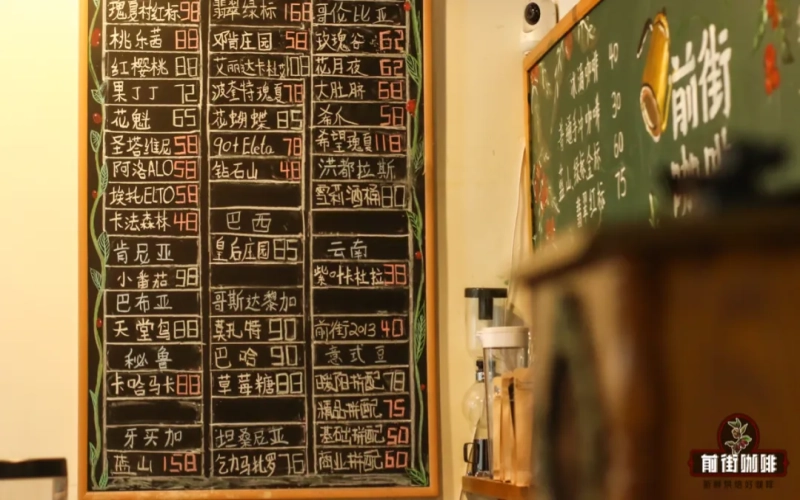
Caturra and Catuai are two coffee varieties that appear with extremely high frequency in the coffee world, and they are not hard to find whether on large estates or in small producing regions. Nearly one-third of the products on Front Street Coffee's bean list are made up of these two varieties, which shows just how important they are. Caturra originated from a genetic mutation of Bourbon, and because of its short stature, high yield, and sun tolerance, it became a mainstay variety in Central America; Catuai, meanwhile, was developed by crossing Caturra with Mundo Novo, inheriting the former's advantages while improving disease resistance. This article will sort out in detail the origins, agronomic characteristics, and flavor differences of the two, and combine them with Front Street Coffee's cupping experience to help you understand why these two varieties have won the favor of so many coffee farmers. [more…]
Are Caturra and Catuai coffee beans both Arabica varieties? What are the differences in their flavor characteristics?
"Caturra" and "Catuai" are two varieties under the Arabica umbrella. They may not be as universally well-known as Typica, Bourbon, Geisha, and other varieties, but they are the rising stars that most coffee farmers are eager to cultivate. Whether it's a large estate like La Esmeralda or Elida, or [more…]
A Comprehensive Analysis of the Caturra Coffee Variety: Characteristics, Advantages, Cultivation Distribution, and Flavor Profile of the Bourbon Mutation
Caturra is one of the most common coffee varieties in Central and South America. As a natural mutation of Bourbon, it has become the dominant variety in many producing regions thanks to its compact size, high yield, and ability to adapt to direct sunlight. This article will guide readers through a comprehensive understanding of this variety, covering Caturra's origin and discovery, its botanical advantages, its spread across Central and South America, and the typical flavors presented by the pure Caturra coffee beans from the Alasitas estate in Bolivia selected by Front Street Coffee. Whether you are just beginning to learn about coffee varieties or want to gain a deeper understanding of the relationship between Caturra and Catuai, this article offers clear and practical reference. [more…]
Bourbon Natural Mutation Caturra: From Variety Characteristics to Brewing Analysis of a Colombian Huila Washed Everyday Bean
Caturra is a natural mutation of Bourbon discovered in Brazil. With its high yield and strong disease resistance, it has become a common choice for large-scale cultivation. The plant is short with compact branching, and it maintains vigorous growth even under direct sunlight, which is why it is called "sun-grown coffee." In addition to Red Caturra and Yellow Caturra, there is also the rare Purple Caturra, which arose from a natural mutation of Red Caturra. In terms of flavor, Caturra typically exhibits bright acidity and medium body, often with lemon or citrus notes in the cup, while its sweetness is greatly influenced by fertilization management. Colombia is an important stage for Caturra, and Front Street Coffee's bean list also includes several Caturra coffees. This article covers the variety's background, the Colombian washed processing procedure, and the brewing parameters and flavor performance of a Huila everyday-drinking bean. [more…]
Caturra vs. Catuai Coffee Bean Varieties Compared: Growing Characteristics, Flavor Differences, and a Hand-Pour Bean Selection Guide for Coffee Beginners
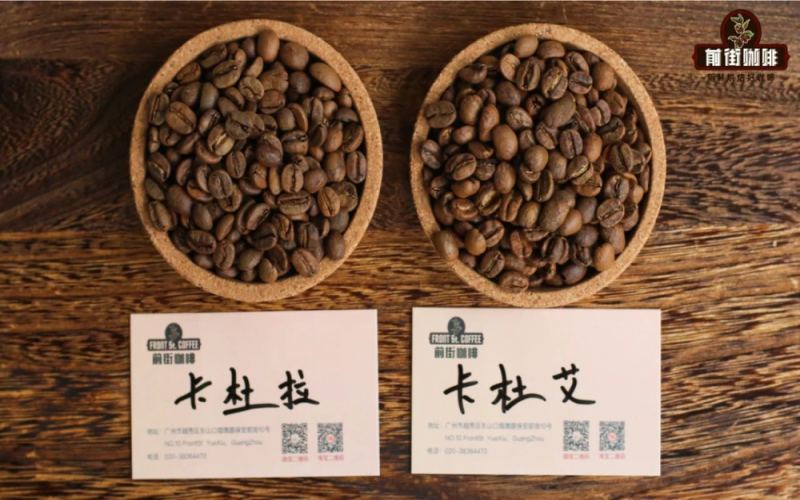
When selecting coffee beans from Central American regions, the names Caturra and Catuai often appear in the variety column. Why are they always planted together and harvested together? If distinguished separately, what are the differences in appearance and cup profile? From the perspective of Front Street, this article sorts out the origins, plant characteristics, and disease resistance of Caturra and Catuai, compares their bean shapes and flavor trends, and explains why they are often mixed-cultivated on Central American estates. The article will also mention several Front Street Coffee beans that contain this pair of "brother" varieties, helping beginners new to pour-over to understand variety information more clearly and make choices that suit them. [more…]
Caturra Coffee Variety Full Analysis: From Bourbon Mutation to Central American Mainstay, Flavor Characteristics and Representative Beans
Caturra is a highly economically valuable natural mutation within the Bourbon lineage. With advantages such as a small plant size, suitability for dense planting, and no need for shade, it has become an important pillar of coffee-growing regions in Central America. In this article, from the perspective of Front Street Coffee, we will sort out the historical origins and variety characteristics of Caturra, and use its Colombian passion fruit enzyme washed Purple Caturra as an example to introduce the Huila region, the processing methods and brewing suggestions of Finca Monteblanco, helping coffee lovers gain a comprehensive understanding of the unique charm of this variety. [more…]
A Comprehensive Analysis of the Caturra Coffee Variety: From a Natural Bourbon Mutation to the Reasons for Mixed Harvesting in Central America and Its Flavor Characteristics
When purchasing coffee beans from Central American origins, the variety column often shows Caturra and Catuai listed side by side. What exactly is the relationship between these two similarly named varieties? Caturra is a natural Bourbon mutation discovered in 1915 in the state of Minas Gerais, Brazil, named for its short stature, and offers advantages such as suitability for high-density planting, tolerance to full sun, and adaptation to altitudes of 700 to 1700 meters. Catuai, on the other hand, was bred by crossing Yellow Caturra with Mundo Novo, inheriting traits of high yield, resistance to wind and rain, and excellent acidity. In this article, Front Street Coffee will systematically sort out the origins, plant characteristics, bean shape differences, and cupping flavor performance of the two, and explain why Central American estates commonly plant and harvest the two together, while also listing well-known coffee products that include this pair of varieties. [more…]

Coffee Varieties | Why is Caturra called "sun-exposed coffee"? What flavors does Caturra coffee present after brewing? What are the pros and cons of Caturra coffee?
Caturra is one of the varieties under the Arabica branch and a descendant derived from the ancient Bourbon variety. Because of its high yield and good flavor performance, it is currently widely cultivated in Central and South America. In the lengthy list of beans at Front Street Coffee, varieties such as Front Street Guatemala La Flor, Front Street Honduras Lychee Orchid, and Front Street Colombia Rose [more…]
Caturra Coffee Bean Roasting Key Points, Brewing Parameters, and Price Reference: From Variety Characteristics to Front Street Coffee Huila Daily Bean Practice
Caturra is a highly representative derivative variety within the Bourbon family, widely cultivated in Central and South America thanks to its high yield and impressive flavor performance. This article begins with Caturra's discovery history, botanical characteristics, growing adaptability, and disease weaknesses, then sorts out the differences among the red, yellow, and purple-fruited Caturra varieties, and provides specific brewing recipes for medium-dark roasted Caturra. The article also draws on Front Street Coffee's Colombian Huila everyday drinking beans to explain the flavor direction of washed red Caturra, the approach to cupping control, and complete parameters including dripper, water temperature, coffee dose, coffee-to-water ratio, grind size, and three-stage extraction technique, for coffee enthusiasts' reference. [more…]
A Detailed Guide to the Caturra Coffee Variety: A Natural Bourbon Mutation, Sun Exposure Characteristics, and Cupping Flavor Performance
Caturra is a natural mutation of the Bourbon variety, named for its short stature and compact branches, and it occupies an important position among coffee varieties. It originated in Minas Gerais, Brazil, and was later widely planted in Central America. Unlike traditional varieties such as Typica and Bourbon, Caturra does not require shade and can grow vigorously in the sun, which is why it is called "sun-grown coffee." Caturra is suitable for cultivation at altitudes of 700 to 1,700 meters, and the higher the altitude, the more pronounced its flavor, offering both bright acidity and aroma as well as good sweetness. This article will introduce in detail Caturra's discovery history, breeding process, cultivation advantages, and flavor characteristics, and combine Front Street Coffee's cupping and product information to help readers gain a comprehensive understanding of this variety. [more…]

Caturra Coffee Variety Full Analysis: From Bourbon Natural Mutation to Central American Mainstay, Flavor Profile and Historical Origins
Caturra, a natural mutation of Bourbon, has gradually become an important pillar of the Central American coffee industry since its discovery in Brazil around 1915, thanks to the high-density planting advantages brought by its dwarf gene. This article will systematically review Caturra's historical context, breeding process, and global spread, and combine Front Street Coffee's cupping experience to provide an in-depth analysis of this variety's flavor performance. At the same time, the article will also introduce the relationship between Caturra and the Catimor family, as well as Front Street Coffee's currently available Caturra daily drinking beans from the Huila region of Colombia, offering coffee lovers a complete reference from variety awareness to practical tasting. [more…]
A Complete Analysis of the Caturra and Catuai Coffee Varieties: Origins, Characteristics, and Front Street Coffee's Recommended Bean List
Caturra and Catuai are common variety labels on coffee beans from Central and South America, and the two names are similar with deep connections. Caturra originated from a natural Bourbon mutation discovered in Brazil, with a compact size, high yield, and no need for shade; Catuai is a hybrid offspring of Mundo Novo and Yellow Caturra, combining high yield with stress resistance. This article provides a detailed overview of the discovery history, plant characteristics, cupping performance, and cultivation adaptability of these two varieties, and explains why they often appear together in the same coffee. Front Street Coffee also recommends a number of related bean lists, including Colombia Huila, Costa Rica Musician Series, and Honduras Sweet Orange Estate, with brewing demonstrations and flavor descriptions to help you fully understand the charm of these two varieties. [more…]
Caturra vs. Catuai Coffee Beans: A Full Analysis of Variety Origins, Cultivation Characteristics, and Flavor Performance
Caturra and Catuai are both coffee varieties that attract a lot of attention in the coffee world. The former originated from a single-gene mutation of Bourbon, while the latter is a hybrid descendant of Mundo Novo and Caturra. The two have their own strengths in plant morphology, resistance to wind and rain, altitude adaptability, and cup flavor. Caturra has bright acidity and prominent sweetness, but is slightly inferior in body and cleanliness; Catuai inherits the advantages of being dwarf and wind-resistant, with stable yields, but unfortunately its flavor layers are slightly one-dimensional. Front Street Coffee has always been committed to sharing coffee knowledge. This article will take you through the differences and respective advantages of this pair of "brothers from the same family," from variety origins and cultivation characteristics to flavor performance. [more…]

A Comprehensive Analysis of the Caturra Coffee Variety: From Bourbon Mutation to the Flavor Profile of Colombian Huila Washed Beans
Caturra is a natural mutation of the Bourbon variety, first discovered between 1915 and 1918 on plantations in the state of Minas Gerais, Brazil. Because the genetic mutation caused the plant to be short and compact, locals called it "Caturra" in the Guarani language, meaning "small." This variety is not only suitable for dense planting, high yields, and easy harvesting, but also has the characteristic of thriving in full sun without the need for shade, which is why it is called "sun-dried coffee." Caturra has stronger environmental adaptability than Bourbon, and can be grown at altitudes ranging from 700 to 1,700 meters, with flavor improving at higher elevations. Its cupping performance is distinguished by bright acidity and sweetness. Under traditional processing methods, it shows pronounced acidic aroma; under natural processing, it presents berry notes; and under washed processing, it carries a bright citrus-like acidity. The Colombia Huila region everyday drinking beans currently sold by Front Street Coffee are exactly the Caturra variety, which, after medium roasting, display a balanced flavor of nuts, dark chocolate, caramel, and soft citrus fruit acidity. [more…]
Caturra vs. Catuai Coffee Varieties: Flavor Characteristics and Brewing Performance of Catuai
In the variety labeling of South American specialty coffee, the similarly named pair of varieties Caturra and Catuaí often appear together, sparking curiosity among many coffee enthusiasts. What exactly is the relationship between the two? As a natural mutation of Bourbon, Caturra changed the planting landscape of Central America with its compact plant size and adaptability to sun exposure; Catuaí, a cross between Mundo Novo and Yellow Caturra, combines high yield with resistance to wind and rain. This article systematically sorts out the differences and connections between the two, from variety origins and botanical characteristics to cup profile, and uses the Catuaí from Honduras's Sweet Orange Estate as an example to showcase Front Street Coffee's brewing approach and flavor performance. [more…]

What bean variety is Caturra, the high-yielding dwarf cultivar? The spread of Caturra and an analysis of its pour-over flavor and brewing
Caturra is known for its small stature and tight secondary branching, allowing for high-density planting and considerable yields per unit area, making it a pivotal bean variety on the coffee map of the Americas. This article will review its path from participating in selection and breeding at Brazil's IAC research institution, to landing in Guatemala in the 1940s, and then spreading across Central American countries. It will also explain why it is often used as a "benchmark" for testing new varieties, as well as the ins and outs of changes in its share of plantings in Colombia. The article also takes stock of several products on Front Street Coffee's bean list that contain Caturra, with a key breakdown of the bean information for Front Street Colombia Rose Valley and a three-stage pour-over recipe, analyzing the release patterns of acidity, sweetness, and bitterness in staged extraction, and finally appending tasting notes for Huila washed Caturra. [more…]
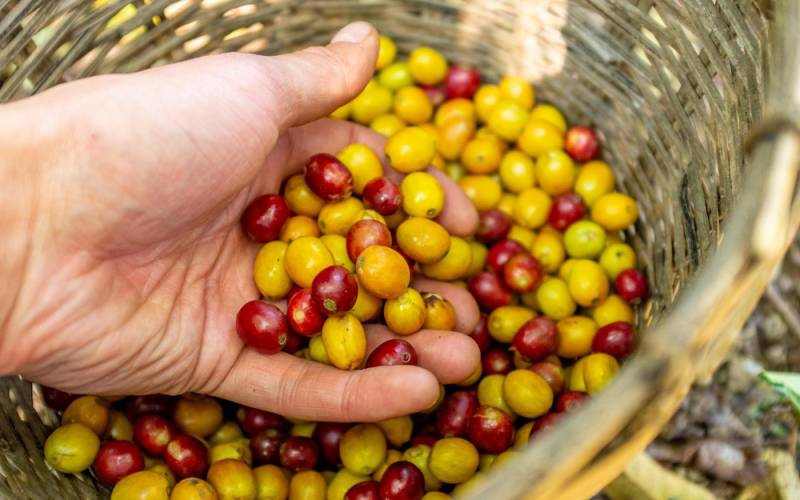
Analysis of Bourbon Family Derivatives: Flavor Comparison of Pacamara, Caturra, Catuai, and Sachimo
Bourbon is one of the most important varieties in coffee history, originating from a mutation of Typica. It was named after being introduced from Yemen to Bourbon Island, and subsequently spread to Brazil, Central and South America, and the island of St. Helena, becoming a consistent winner in cupping competitions for specialty coffee in the Americas. Its green fruit turns bright red when ripe, and it has broad leaves and dense growth. Although it produces a crop every two years with low yield, it possesses a wine-like acidity and a sweet aftertaste. This article, brought to you by Front Street Coffee, introduces four Bourbon-derived or related varieties: Pacamara, Caturra, Catuai, and Sarchimor, systematically covering their origins, plant characteristics, adaptability, and cup profiles. Combined with the performance of specific origins such as Guatemala Borsa, Colombia Cauca, Honduras Sweet Orange Estate, and Costa Rica Monte Soleil, it helps coffee enthusiasts understand how varieties profoundly influence the flavor direction of a cup of coffee. [more…]
Is Caturra Part of the Arabica Family? A Complete Guide to the Origins and Key Characteristics of the Caturra Variety
Many coffee enthusiasts, once they get into specialty coffee, begin to pay attention to information such as origin, processing method, and variety. Coffee varieties are broadly divided into two major categories, Arabica and Robusta, but the differences behind the two are often overlooked. This article, from the perspective of Front Street, sorts out the origin of the Arabica species and the context of its subspecies, and focuses on Caturra—it originates from a natural mutation of Bourbon, has a short plant, is easy to pick, has better disease resistance than the parent species, and has higher yield, and is widely planted in Central and South America. The article will also mention common varieties such as Typica, Bourbon, and Geisha, as well as related Front Street products and brewing suggestions, to help readers build a more complete understanding of varieties. [more…]
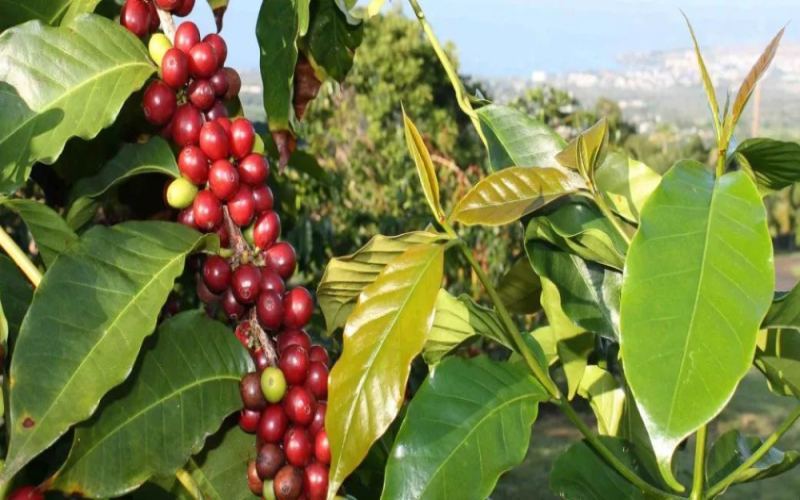
Caturra Coffee Bean Flavor Analysis: Taste Characteristics and Brewing Suggestions of a Single-Gene Bourbon Variant
Caturra is an important single-gene mutation within the Bourbon family, and thanks to its exceptional adaptability and high-yield characteristics, it has become a leading variety in coffee-producing countries across Central and South America. From its discovery in Brazil to widespread cultivation in Colombia and Costa Rica, Caturra occupies a key position in the specialty coffee landscape. This article provides a detailed overview of Caturra's origins, spread, and flavor profile, and, drawing on Front Street Coffee's cupping experience, analyzes the taste differences under natural and washed processing. It also introduces the producing region information, flavor description, and brewing parameters of Front Street Coffee's Colombia Huila staple beans, offering coffee enthusiasts practical references for tasting and brewing. [more…]
Tracing the Catuaí Coffee Variety: From the Cross of Mundo Novo and Caturra to One of Brazil's Four Mainstays
Catuai is a quite representative hybrid variety in the Arabica coffee family, bred by crossing Mundo Novo with Caturra. It inherits Caturra's advantage of a short stature, while also compensating for Arabica's defect of fruit that easily drops, with excellent wind and rain resistance and solid fruiting. However, its flavor profile is relatively one-dimensional, lacking in body, and its harvest lifespan is only about ten years—these shortcomings have also limited its development. Catuai comes in red and yellow fruit types, and statistically, the red type wins awards more often. In Central America, Caturra and Catuai are often planted together, with Costa Rica being especially typical. The renowned Front Street Guatemala La Flor is a blend of three varieties: Bourbon, Caturra, and Catuai. Front Street Panama Casa Ruiz honey process and Front Street Brazil Cerrado Nascente Farm are also representative works of Catuai. [more…]